No products in the cart.
The Looting of the Yuan Ming Yuan
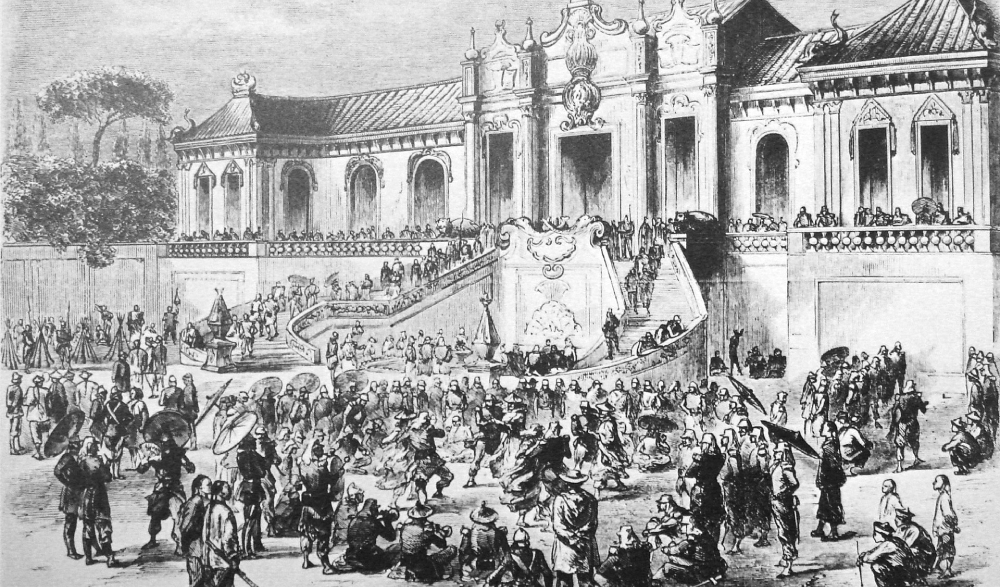
The wonders of the Gardens of Perfect Brightness have vanished. Their palaces were looted and then burned by Franco-British troops in October 1860. Some of the artefacts can now be found in Western museums and private collections.
The sacking of the Old Summer Palace is a significant event in China’s modern history, particularly during the “Century of Humiliation” (1839–1949) and the Opium Wars.
During the Second Opium War (1856–1860), the United Kingdom and France sought to force China to open its market to opium. In retaliation for several incidents, French and British contingents landed in northern China near Tianjin in September 1860, then advanced to Beijing and the Summer Palace, which they looted on the night of October 5. Although French commander Charles Cousin-Montauban claimed nothing was touched, the reality was quite different. Awed by the palaces’ wealth, French soldiers, followed by British troops, organized a systematic plundering of the gardens, seizing precious jade objects, ivory statues, silks, carpets, porcelain, and more. However, the palaces themselves remained intact.
It was not until October 18 that Lord Elgin, the British High Commissioner to China, ordered the main palaces to be set on fire in retaliation for the torture and killing of several members of the British delegation.
The Gardens of Perfect Brightness suffered a second looting during the Boxer Rebellion in 1900, when the Eight-Nation Alliance occupied Beijing. The site’s destruction was completed during the turbulent years China experienced until 1949, as locals used stones and ruins from the palaces as building materials.
Today, Yuan Ming Yuan is a place of leisure and remembrance for all Chinese. While reconstruction projects are often proposed, they have never been implemented, preserving the site’s historical significance.