The Unique Blend of Chinese and Western Arts in the Old Summer Palace
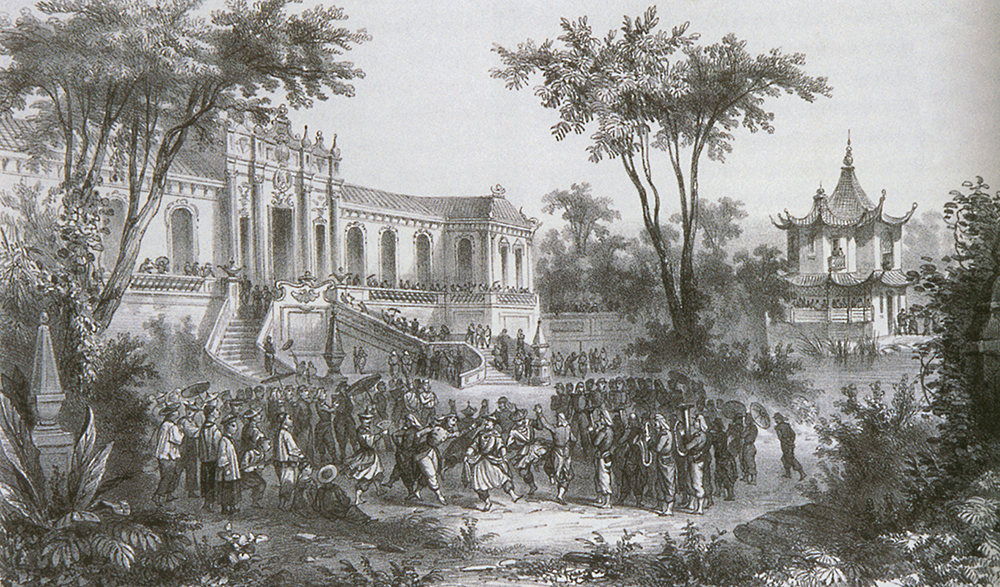
If you are fortunate enough to visit the site of the Old Summer Palace in Beijing today, you will undoubtedly be surprised to find remnants of European-style buildings rather than exclusively Chinese architecture. Among these, the baroque-style ruins of the Grand Fountain remain visible.
The Gardens of Perfect Brightness once housed numerous structures, including palaces, temples, pagodas, pavilions, and a significant library that held books and stone tablets—sadly lost during the looting. Most of these buildings were predominantly in Chinese architectural style. However, due to the presence of Jesuit priests and the Chinese emperors’ fascination with European exoticism, several structures were built in a Western architectural style.
The “Western Mansions” were constructed during the reign of Emperor Qianlong and were designed by the Italian missionary Giuseppe Castiglione (1688–1766). A skilled artist and the emperor’s portraitist, Castiglione drew inspiration from engravings of the Palace of Versailles, which had been sent to the emperor, to design this garden. He was joined by another Jesuit priest and missionary, Michel Benoist (1715–1774), who worked on the garden’s fountains and the famous water clock with its twelve statues representing the animals of the Chinese zodiac.
A belvedere and a labyrinth completed these Sino-European Western Mansions, the ruins of which are all that can be seen today.